
BMW Drivetrain Malfunction: What It Means, Common Causes and What to Do

"Drivetrain malfunction" is one of the BMW messages that worries owners most, and for good reason. It usually comes with less power, and it does not say why. It means the engine or transmission control unit has found a fault that affects how the car drives. Depending on the model and year, the message may add something like "Drive moderately" or say that full power is not available. The cause can be anything from a worn spark plug to a transmission fault, and the only way to know which is to read the fault codes the car has stored.
What the message means
The engine computer, which BMW calls the DME, and the transmission computer watch a large number of signals while you drive. When one of them sees a fault that could affect power, emissions or the drivetrain itself, it stores a code and shows the message. Often it also limits power, sometimes a lot, to protect the engine, the turbochargers or the transmission. Some owners call this limp mode. A check engine light may come on with the message, or a little later.
What it does not tell you
The message looks the same for very different faults. A misfire from one ignition coil, a cracked charge pipe and a transmission problem can all show "Drivetrain malfunction." It tells you the car found something serious enough to protect itself. It does not tell you what.
What to do when it appears
- Ease off. Avoid hard acceleration. Many cars will not give you full power anyway.
- Look at the rest of the dash. A check engine light, steady or flashing, a temperature warning, a battery or charging message or a transmission symbol all help narrow the cause.
- Notice how the car feels. Shaking, stumbling, a loss of power, a hiss under acceleration or harsh shifts. Tell the technician all of it.
- Get off the road and call. Stop somewhere safe, then call the shop and describe what the car is doing. Whether it should be driven in or towed depends on the symptoms, so let the shop help you decide.
If the message comes with a flashing check engine light, a red temperature warning, heavy shaking or a loss of power in traffic, pull over where it is safe and turn the engine off. Do not keep restarting the engine to clear the message.
A flashing check engine light means a misfire bad enough to damage the catalytic converter, as our post on a flashing check engine light explains. The message may go away after a restart, but the fault is still stored, and it usually comes back.
Common causes
Ignition coils and spark plugs
On many BMW gasoline engines this is the most common cause. A coil that fails, or a worn plug that strains the coil above it, causes a misfire. Turbocharged engines are harder on plugs, so their replacement intervals tend to be shorter.
Fuel injectors and the high-pressure fuel pump
Direct-injection BMW engines run fuel at very high pressure. A leaking or sticking injector, or a high-pressure pump that cannot keep up, causes misfires, long cranking and low fuel pressure codes. The N54 twin-turbo six from the late 2000s into the mid 2010s is the best-known example, but it is not the only engine affected.
Boost leaks and charge pipes
On turbocharged engines, the charge pipe carries pressurized air from the turbo toward the throttle. On several engines, including the N54 and N55, the original pipe is plastic, and heat makes it brittle until it cracks or comes off. The engine gets less boost than it asked for and cuts power. A hiss or a whoosh under acceleration is a typical sign.
Valve timing (VANOS) solenoids
VANOS is BMW's variable valve timing. Solenoids use oil pressure to adjust the camshafts, and if one sticks or clogs with sludge, the timing drifts from where the engine computer wants it. Overdue oil changes make this more likely. Typical signs are a rough idle, weak low-end power and camshaft timing codes.
Sensors
The engine computer depends on sensors such as crankshaft and camshaft position, boost pressure and fuel pressure. A failing sensor feeds it wrong information, and it protects the engine by limiting power. The code points to a circuit, and testing shows whether the sensor, the wiring or a connector is to blame. Humidity in connectors can be a factor on Miami cars.
Electric coolant pump or thermostat
On some engines with an electric coolant pump, a failing pump or thermostat can bring up the same message and cut power to protect the engine from heat.
Low battery voltage
Modern BMWs are sensitive to voltage. A weak battery, a failing alternator or a new battery that was never registered can make several control units log faults at once, and the drivetrain message can be one of them. That is why a battery and charging test belongs in the diagnosis.
Transmission faults
On automatic models, the transmission control unit can set off the same message, or a transmission message of its own. Low fluid, a fault in the valve body or its electronics, or a failed sensor can all do it. You may feel harsh or late shifts, or the car may hold one gear.
Why the codes come before the parts
Replacing coils because coils are a common cause is a guess. A proper diagnosis starts by reading the fault memory of every control unit, not just the generic engine codes a basic code reader shows. BMW-specific tools see the manufacturer codes and the conditions when each fault was stored. From there the technician tests the suspect part: moving a coil to another cylinder to see if the misfire follows it, smoke-testing the intake for a boost leak, checking fuel pressure or load-testing the battery. That way the repair goes to the part the tests point to.
Related services at DS Proformance
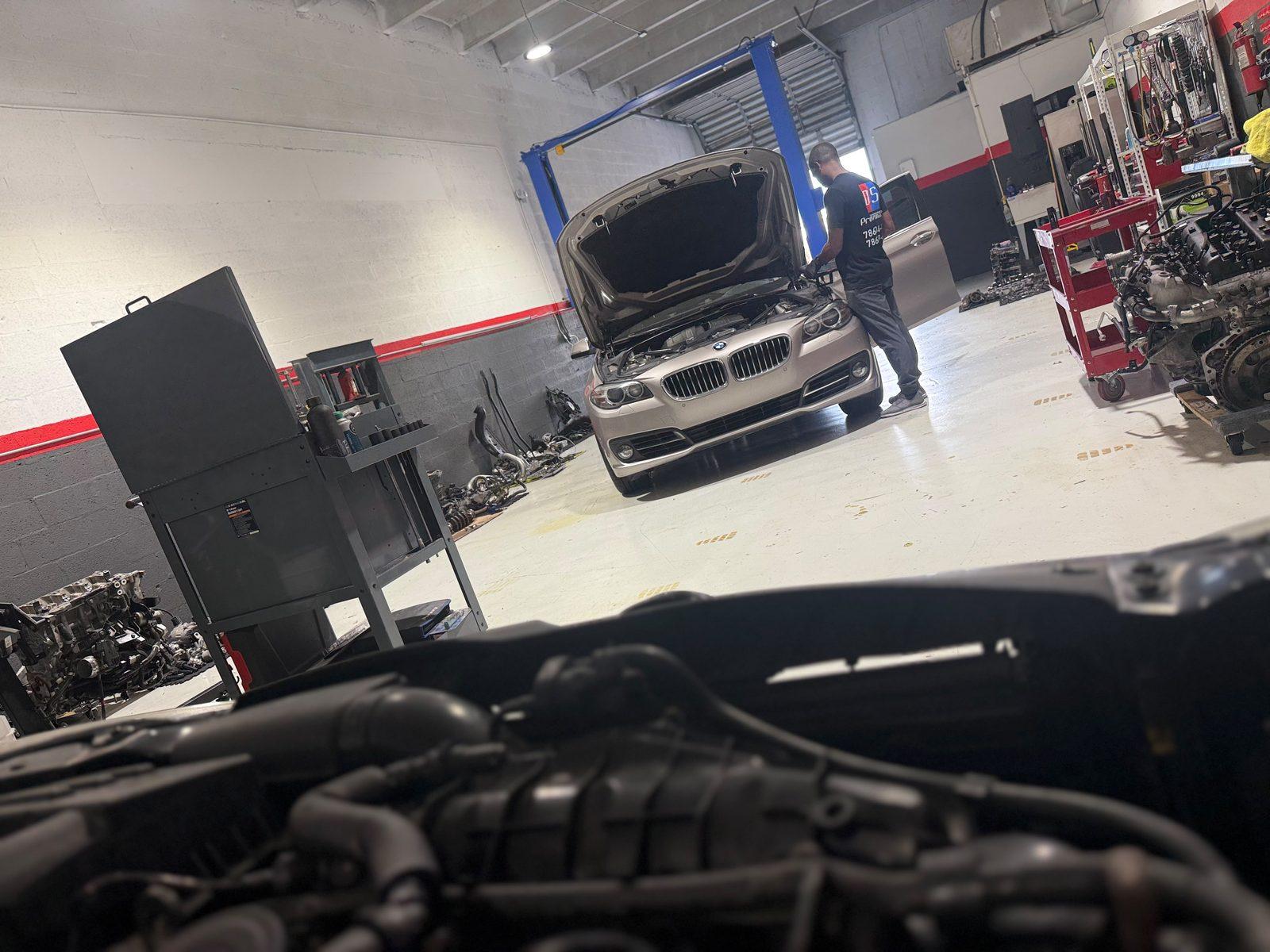
At DS Proformance in Kendall we read the fault memory of every module, test the components and register new batteries the way BMW requires, and you get a written estimate before any work starts. Our diagnostic services page explains how we find the cause, our BMW repair page covers the other common problems on these cars, and if the car is not safe to drive, contact us and we will help you plan how to bring it in.

 Chat with Us